Friday, January 10, 2025

How to Clean a Shuffleboard in 3 Minutes: Master Shuffleboard Players Hate This

Keeping your shuffleboard table clean is key to enjoying countless hours of smooth sliding and friendly competition. A well-maintained table ensures pucks glide effortlessly and scores remain accurate. Ready to learn how to clean a shuffleboard table? The quick answer is this: start by dusting the surface with a microfibre cloth, then apply a specialized shuffleboard cleaner and buff it gently with a soft towel.
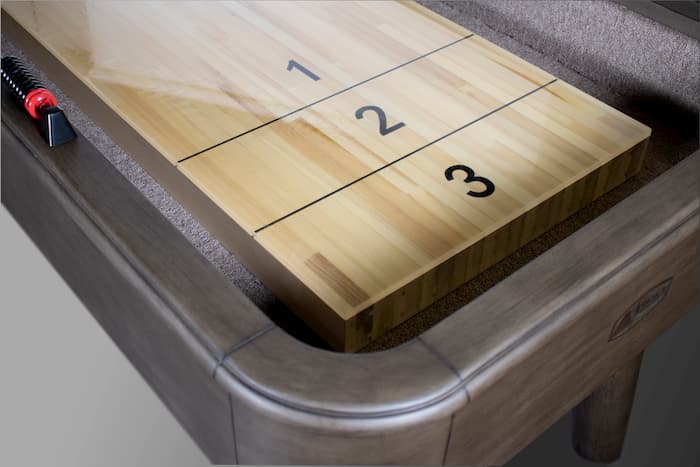
Close up of the collins shuffleboard "How to clean a shuffleboard"

The process is simple but important. Regular cleaning prevents the dirt, dust, and old wax buildup that can affect gameplay. It also helps protect the wood surface from damage over time.

A clean shuffleboard table not only looks great but also performs better. With proper care, your table will provide years of fun for family and friends. Whether you’re a casual player or a serious competitor, a clean table is the foundation for an enjoyable shuffleboard experience.

Preparation for Cleaning

Get ready for a thrilling journey into the world of shuffleboard maintenance. Like a knight preparing for battle, you’ll arm yourself with the right tools and knowledge to face any grime that dares to tarnish your beloved table.

Gathering the Right Supplies

First, gather your cleaning arsenal. You’ll need:

• Silicone spray • Shuffleboard wax • Multi-purpose cleaner • Shuffleboard brush • Soft cloths • Vacuum cleaner (optional)

These items are your trusty companions on this cleaning quest. The silicone spray acts as a shield, protecting the table’s surface. Shuffleboard wax is like magic dust, making the pucks glide smoothly. The multi-purpose cleaner is your potion for banishing dirt. Lastly, the shuffleboard brush is your mighty sword, sweeping away debris.

Assessing Your Table’s Condition

Now, it’s time to size up your opponent. Look closely at the table’s surface. Are there visible marks or scratches? Is there a build-up of old wax? Check the gutters and edges for dust and debris. This step is like scouting the battlefield before the big fight.

Feel the surface with your hand. Is it smooth or rough? Are there any sticky spots? These clues will guide your cleaning strategy. Remember, each table is unique and may need special care. By understanding your table’s condition, you’ll be better prepared to tackle the cleaning process head-on.

Routine Cleaning and Maintenance

Keeping a shuffleboard table clean is key to its performance and longevity. Regular upkeep prevents issues and ensures smooth gameplay.

General Cleaning Procedure

Start by gathering your cleaning supplies. You’ll need a soft microfiber cloth, a spray bottle with water, and mild dish soap. Mix a tiny squirt of soap with water in the bottle.

Spray the solution lightly on the table surface. Don’t soak it – a little goes a long way. Wipe the table gently with the cloth, moving from one end to the other.

For stubborn marks, use a bit more elbow grease. But be careful not to scrub too hard. You don’t want to damage the finish.

Once you’ve cleaned the whole surface, grab a dry cloth. Wipe the table again to remove any leftover moisture. A dry table is a happy table!

Removing Dust and Debris

Dust bunnies beware – it’s time for their eviction! Grab a soft-bristled brush or a clean, dry microfiber cloth. Sweep or wipe the table surface gently.

Pay extra attention to the gutters. They’re like dust magnets. A small brush can help get into these tight spots.

For pesky bits that won’t budge, try a can of compressed air. It’s like giving your table a mini hurricane – minus the property damage.

Don’t forget the sides and legs of the table. Dust likes to settle there too. A quick wipe-down keeps everything spick and span.

Regular dusting is like a spa day for your shuffleboard. It keeps the playing surface smooth and prevents buildup. Your pucks will thank you for the VIP treatment!

Performance Optimization

Proper maintenance and adjustments are key to a shuffleboard table’s optimal performance. These steps can significantly improve gameplay and extend the table’s lifespan.

Waxing and Silicone Application

Waxing and silicone application are crucial for a smooth playing surface. A thin layer of silicone spray creates a slick surface, allowing pucks to glide effortlessly. Speed powder, also known as shuffleboard wax, further enhances this effect.

Players should apply silicone spray evenly across the table. They can use a clean cloth to spread it uniformly. After the spray dries, they should sprinkle speed powder lightly over the surface.

Too much wax can slow pucks down, while too little may cause them to stick. Finding the right balance is essential for ideal gameplay.

Adjusting for Climate

Climate plays a big role in shuffleboard table performance. Humidity and temperature changes can affect the playing surface.

A climate adjuster helps maintain the table’s flatness. It compensates for warping caused by moisture or heat. Players should check and adjust it regularly, especially during seasonal changes.

In humid areas, dehumidifiers can help protect the table. For dry climates, a humidifier may be necessary to prevent the wood from cracking.

Keeping the room temperature stable also helps. Sudden temperature shifts can cause the table to expand or contract, affecting gameplay.

Improving Puck Glide

Smooth puck glide is vital for enjoyable shuffleboard games. Regular cleaning and maintenance can greatly improve this aspect.

Players should clean pucks after each use. Any dirt or debris can hinder their movement. A soft cloth and mild cleaner work well for this task.

Checking pucks for damage is also important. Scratches or chips can affect their glide. Replace damaged pucks to ensure fair play.

The table’s levelling is another factor. Use a level tool to check for any unevenness. Adjust the legs as needed to create a perfectly flat surface.

Protecting Your Shuffleboard Table
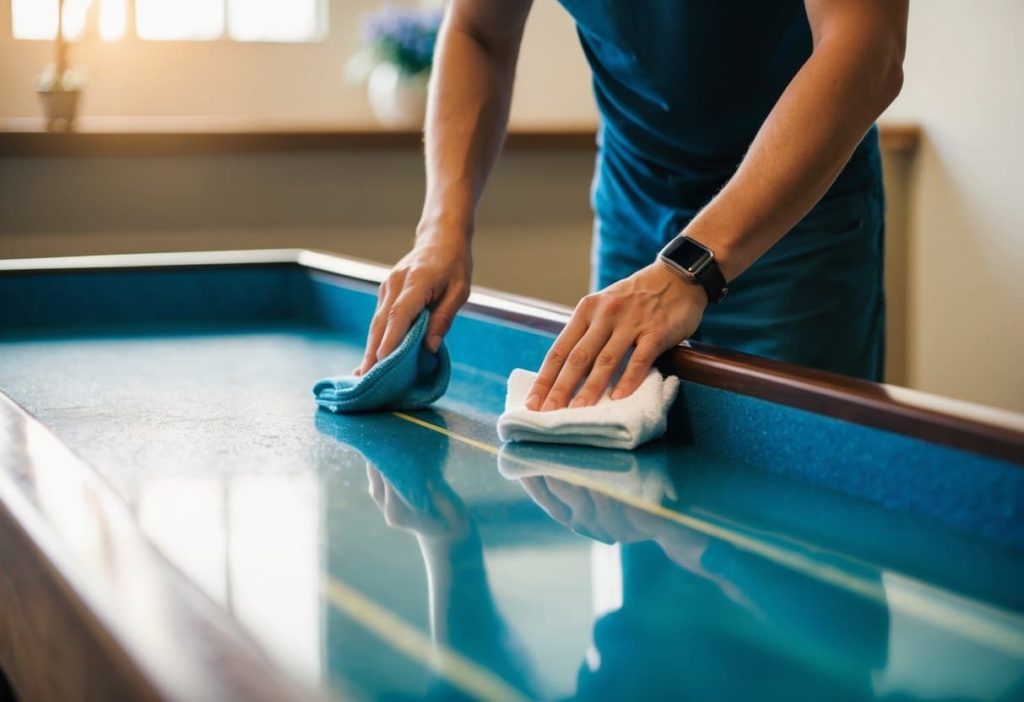
how to clean a shuffleboard is part of shuffleboard maintenance

Proper care and protection are key to keeping a shuffleboard table in top shape. Regular upkeep helps maintain its smooth surface and extends its lifespan.

Utilizing Furniture Wax and Polish

Furniture wax and polish play a big role in protecting shuffleboard tables. A thin layer of wax helps guard the surface from scratches and wear. It’s best to use a high-quality paste wax made for wood.

Apply the wax in small circles using a soft cloth. Let it dry for about 15 minutes, then buff it with a clean cloth. This creates a smooth, shiny finish.

Some players prefer liquid polish over wax. Polish is easier to apply but may not last as long. It’s a good choice for quick touch-ups between games.

Long-Term Maintenance and Protection

Long-term care keeps shuffleboard tables in prime condition. A polymer finish can add an extra layer of protection to the wood surface. This clear coat helps prevent damage from spills and heavy use.

Reapply the polymer finish every few years, or when the surface starts to look worn. Clean the table well before adding a new coat. Follow the maker’s instructions for the best results.

Cover the table when it’s not in use. This guards against dust, sun damage, and accidental spills. A fitted cover works best, but a clean sheet can do in a pinch.

Check the table’s legs and frame often. Tighten any loose screws or bolts. This keeps the table stable and level, which is key for fair play.

Special Considerations for Outdoor Shuffleboard
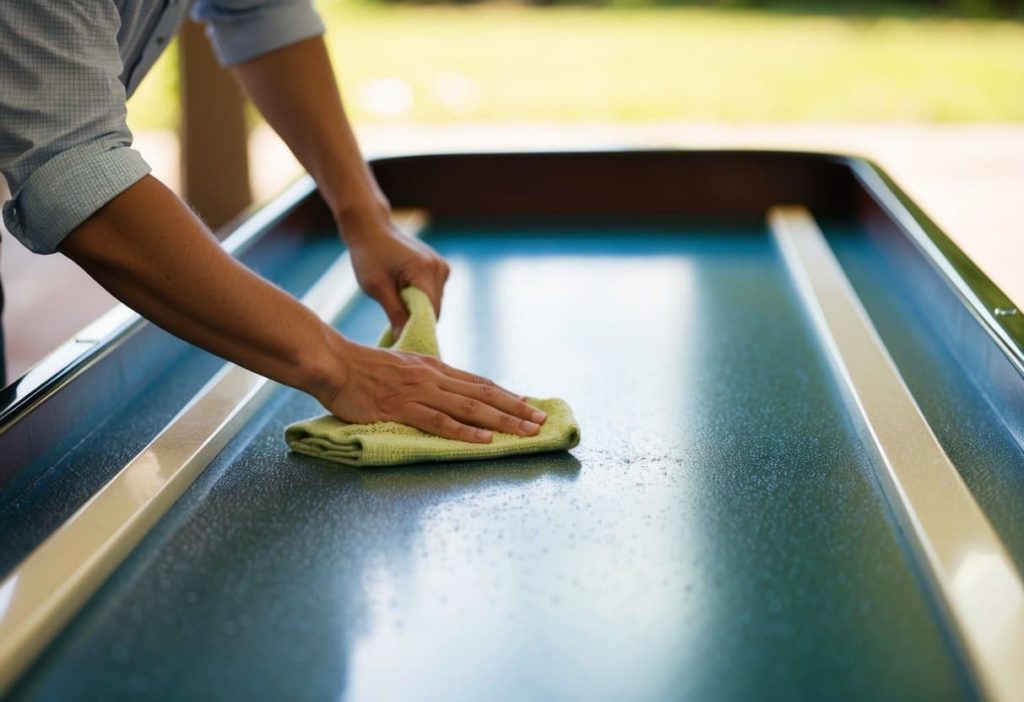
Outdoor shuffleboard tables face unique challenges. Weather can damage the playing surface and equipment. Regular cleaning is extra important for these tables.

Sun exposure can fade and crack the table’s finish. Use a cover when the table isn’t in use. This protects it from sun and rain.

Moisture is a big concern for outdoor tables. Wipe up any water right away to prevent warping. Check the table often for signs of mould or mildew.

Leaves and dirt can scratch the surface. Sweep the table before each game. Use a soft-bristled broom to avoid damaging the finish.

Choose cleaning products made for outdoor use. They’re tougher on grime and can stand up to the elements. Always test cleaners on a small area first.

Apply a fresh coat of silicone spray after cleaning. This helps the pucks glide smoothly. It also adds a layer of protection against moisture.

Store playing equipment indoors when not in use. This keeps pucks and cues in good shape. It also prevents them from becoming projectiles in strong winds.

Consider bringing the table inside during harsh winters. If that’s not possible, use a heavy-duty cover designed for outdoor shuffleboard tables.

Troubleshooting Common Issues

Keeping a shuffleboard table in top shape can be tricky. A few common problems often crop up, but they’re easy to fix with the right know-how.

Dealing with Sticky Surfaces

A sticky shuffleboard surface makes for a frustrating game. Dust and dirt are often the culprits. A quick clean with a microfibre cloth can work wonders. For tougher grime, try a specialized shuffleboard cleaner.

If the stickiness persists, the silicone spray may have worn off. Apply a fresh coat of silicone spray. Be sure to let it dry fully before playing.

Temperature changes can also cause stickiness. Keep the table in a room with steady temperature and humidity.

Addressing Climate Adjuster Problems

Climate adjusters help keep the table flat. If they’re not working right, the game suffers.

Check if all adjusters are at the same height. Uneven adjusters can warp the playing surface. Use a level to make sure the table is flat.

Loose adjusters are another common issue. Tighten them with a wrench, but be gentle to avoid damage.

If adjusters won’t budge, they might be stuck. A drop of lubricant can often free them up.

Resolving Puck-Related Problems

Puck glide is key to a good game. If pucks aren’t sliding smoothly, the problem might be the pucks themselves.

Check pucks for chips or cracks. Even small damage can affect their slide. Replace any damaged pucks.

Dirty pucks can also cause issues. Clean them with a soft cloth and mild soap. Dry them well before use.

If pucks are sliding too fast or slow, the problem might be the playing surface. Make sure it’s clean and properly waxed.

Remember, regular care prevents most puck problems. Store pucks in a clean, dry place when not in use.

Frequently Asked Questions

Proper care and maintenance are key for keeping a shuffleboard table in top shape. Common issues can often be solved with the right cleaning methods and products.

What are the steps for maintaining a shuffleboard table?

Regular upkeep is crucial. Dust the table daily with a soft cloth. Clean the surface weekly with a mild cleaner. Apply shuffleboard wax monthly. Check the climatic adjusters every few months to keep the table level.

Can vinegar be used to clean a shuffleboard surface?

Vinegar is not recommended for cleaning shuffleboard tables. It’s too acidic and can damage the playing surface. Stick to cleaners made for shuffleboards or a mix of warm water and mild dish soap.

What are common solutions if shuffleboard pucks aren’t sliding properly?

Poor puck sliding is often due to dirt or lack of wax. Clean the table thoroughly. Apply a fresh coat of shuffleboard wax. Make sure the table is level. Check the pucks for damage or wear.

Is it safe to apply silicone spray to a shuffleboard table?

Silicone spray is not safe for shuffleboard tables. It can damage the playing surface and affect gameplay. Use only products made for shuffleboards, like shuffleboard wax or powder.

How should one go about restoring an old shuffleboard table?

Start by cleaning the table thoroughly. Sand the surface lightly to remove scratches. Apply several thin coats of shuffleboard finish. Let each coat dry fully. End with a coat of shuffleboard wax.

What’s the proper way to disassemble a shuffleboard table for moving or repair?

Remove the scoreboard and legs first. Take off the side rails. Lift the playing surface carefully – it’s heavy, so get help. Wrap all parts in blankets or bubble wrap. Label each piece for easy reassembly later.

Clean Your Shuffleboard Table with a Water-Based Oil and Vinegar Solution

To prep your table for polishing and waxing, you first need to remove any dust and debris from the surface. The product you use to clean the board depends on its material.

  • Wood finishes require water and vinegar mixtures to draw out dirt from the pours. Adding a drop of oil lubricates the wood and prevents cracking and splintering. Wooden furniture polish can enhance the look of wooden tables, too.
  • Polymer finishes are easiest to clean; you can use most glass and multi-purpose cleaners. Alternatively, a damp rag can do the trick.
  • Lacquer finishes work well with ordinary furniture wax and polish. The cleaning instructions on the bottle apply.

Clean your table when you first setup it up! After the initial clean, you can get away with buffing and polishing a few times each month. A nice table cover can reduce the amount of work spent on this step, too.

Spray Silicone and Distribute Wax Powder Evenly along the Table

Periodically, you may wish to wax the table after cleaning it. Doing so maintains a smooth, even feel and protects the table from scratches and grooves. Apply this wax with a soft towel and let it sit for several minutes before spraying.

To a dry table, apply silicon spray purchased from your local billiards store. Mist the table evenly, letting it dry for a minimum of five minutes before dusting with wax. Once ready, sprinkle the wax powder over the shuffleboard for slick, accurate gameplay. Make sure to use wide sweeping motions to prevent clumping.

The post How to Clean a Shuffleboard in 3 Minutes: Master Shuffleboard Players Hate This first appeared on Canadian Home Leisure.

source https://canadianhomeleisure.ca/how-to-clean-shuffleboard-table/

Tuesday, December 10, 2024

Best Pool Table Felt Colours: Top Picks for Billiards Tables

Pool table felt colours can greatly impact the look and feel of your game room. The right colour choice adds style and sets the mood for exciting matches.

The best pool table felt colours are often green, blue, red, or grey, but personal preference plays a key role. Some players like classic green for its traditional look. Others prefer bold reds or blues to make a statement. Grey is a trendy option that fits well in modern spaces.

Which Color Billiards Felt Should You Choose?

5 different colours of billiard felt to choose from in the Elle II pool table
For more options for billiard tables click here

Billiards Forum recently ran a poll, asking its users which colour felt they preferred. An overwhelming majority settled on green and blue. Combined, these colours accounted for 99% of responses.

And rightfully so.

For ages, tables have sported royal green felts. Only in the last few years has Blue gained traction in halls and tournaments.

Both green and blue are believed to strain the eyes less than louder colours like red. True or not, the colour you choose should come down to preference—things like material and installation matter more to gameplay and durability.

Remember that the felt laid is never permanent. Most tables need resurfacing after a while. Nevertheless, you can preserve your felt by brushing and cloaking it regularly.

Factors When Choosing Billiards Felt

Reflectivity

The colour of a billiard table changes its sheen. Dark colours tend to downplay shadows, but they also reduce visibility and affect our ability to visualize angles. Light colours promise the best balance—soft, even lighting. Arguably, gray beats out all other colours regarding such criteria.

Thickness

The thickness of the felt affects how the ball rolls. The thicker the felt, the less the slate impacts speed and directness. For expensive concrete slate tables, thin felts are best. Similarly, the coarseness of the fabric determines the maximum rolling distance. Thick, sticky felt absorbs too much momentum.

Coordination

Although some colours are more popular than others, not every colour will jive with your décor. Before picking a felt, consider the primary colours of your home. Neutrals not only promise the greatest visibility, but they complement most paints and furniture.

When picking a felt colour, think about the room’s decor and lighting. The felt should blend with the space while still standing out as a focal point. In the end, the best colour is one that makes you happy and eager to play.

Understanding Pool Table Felt

Pool table felt is a key part of the game. It affects how balls move and how players perform. The right felt can make a big difference in gameplay.

Material and Quality

Pool table felt is often made from wool. Worsted wool is a top choice. It’s smooth and lets balls roll fast. Merino wool is another good option. It’s soft and durable.

High-quality felt lasts longer. It keeps its colour and shape well. Better felt means fewer wrinkles and less pilling. This helps balls move more smoothly.

Some felt blends include nylon. This can make the felt stronger. But it may change how the balls move. Pure wool is still the go-to for serious players.

Importance of Colour Selection

Felt colour affects more than looks. It can change how players see the balls. Some colours make it easier to spot balls. Others might be harder on the eyes.

Green is a classic choice. It’s easy on the eyes for long games. Blue is popular too. It can make the balls stand out more.

Darker colours like navy or burgundy look nice. But they might make it harder to see the balls. Bright colours can be fun but may be distracting.

The right colour can make players feel more at ease. This can lead to better play.

Popular Felt Colours in Billiards

Green and blue are the most common felt colours. They’re used in many tournaments. The Championship Tour Edition often uses a bright blue felt.

Here’s a list of popular felt colours:

  • Tournament Blue
  • Electric Blue
  • Forest Green
  • Championship Green
  • Burgundy
  • Camel
  • Grey

Some players prefer specific colours. Red felt is eye-catching but less common. Black felt looks sharp but can make play harder.

Light colours show chalk marks more. Dark colours can hide dirt better. The choice often comes down to personal taste and how the table will be used.

Aesthetics and Room Decor

pool table green

Pool table felt colour plays a big role in setting the mood and style of a game room. The right choice can tie the whole space together and make a strong visual impact.

Complementing Room Ambiance

Green felt is a classic choice that suits many spaces. It brings a traditional billiards hall feel to any room. For a modern look, grey or blue felt works well with sleek decor.

Dark colours like navy or burgundy create a rich, upscale vibe. They pair nicely with wood tones and leather furniture.

Light colours such as tan or cream brighten up dim rooms. They give a fresh, airy feel to the space.

Consider the room’s lighting when picking felt colour. Some shades may look different under various light types.

Expressing Personal Style with Felt

Bold felt colours let you show off your unique taste. Bright red or purple make eye-catching statements.

Sports fans might choose felt that matches their team colours. This creates a fun theme for the game room.

Nature lovers could opt for colours that mimic the outdoors. Sky blue or forest green bring a calming touch.

Think about how the felt colour fits with your other decor items. Art, rugs, and furniture should all work together.

Classic Versus Contemporary Themes

Green and red felt give a timeless look. They suit rooms with antique furniture or traditional styling.

For modern spaces, try sleek black or white felt. These create a clean, minimalist aesthetic.

Grey felt offers a nice middle ground. It works in both classic and contemporary settings.

Mixing old and new can be fun too. A bold felt colour can add flair to an otherwise traditional room.

Remember that felt colour affects gameplay too. Some players find certain colours easier to see the balls against.

Performance and Playability

pool table felt colours

The colour of the pool table felt affects both gameplay and visibility. Certain shades can impact a player’s ability to see balls clearly and judge shots accurately.

Impact of Colour on Gameplay

Dark green and blue felts are popular choices for their classic look and smooth playing surface. These colours provide good contrast with white cue balls and coloured object balls. Red felt can make it harder to see red balls, while black felt may cause eye strain during long games.

Light colours like tan or grey can make it tougher to judge ball speed and spin. However, they often show fewer chalk marks, keeping the table looking cleaner. Some players find lighter felts help them focus better on ball position and angles.

Visibility and Contrast Considerations

The best felt colour balances visibility and eye comfort. Electric blue offers high contrast and is easy on the eyes. Forest green provides a neutral backdrop that doesn’t compete with ball colours. Burgundy can add warmth while still allowing good ball visibility.

Good lighting is key for any felt colour. Bright, even light reduces shadows and glare. This helps players see clearly across the entire table surface. Some venues use slightly textured felt to cut down on glare from overhead lights.

For home tables, it’s smart to consider the room’s decor and lighting when picking felt colour. The goal is a pleasant playing experience that doesn’t strain eyes or distract from the game.

Colour Selection Based on Lighting

pool table colors

The right felt colour for your pool table depends greatly on the lighting in your room. Proper colour choices can boost visibility and enhance your playing experience.

Influence of Lighting Conditions

Lighting plays a big role in how the pool table felt looks. Bright rooms need different colours than dim spaces. Natural sunlight changes how felt appears during the day.

In sunny rooms, light colours like tan or light blue work well. They don’t fade as much in strong light. Darker rooms benefit from brighter felt shades. Vibrant greens or blues can make the table pop.

Some felt colours change under different lights. A felt that looks great in daylight might seem dull under artificial lighting. It’s smart to test felt samples in your room at different times of day.

Optimal Felt Colours for Various Lighting

Here’s a quick guide to felt colours for different lighting:

  • Bright rooms: Light blue, tan, grey
  • Dim rooms: Bright green, royal blue, red
  • Rooms with lots of windows: Forest green, navy blue
  • Rooms with warm lighting: Burgundy, dark green

For the best contrast, pick a felt colour that stands out from your balls. This makes it easier to see shots. Green is popular because it contrasts well with most ball colours.

In rooms with changing light, medium shades often work best. They look good in both bright and dim settings. Avoid very dark colours in poorly lit rooms, as they can make play harder.

Maintenance and Durability Considerations

felt for pool table

Pool table felt colour affects both upkeep and lifespan. Some hues need more care, while others stay fresh longer. Proper maintenance keeps any felt looking great.

Ease of Cleaning Different Colours

Light felt shows dirt and chalk marks easily. It needs frequent brushing and vacuuming. Dark colours like navy or green hide stains better. They don’t need cleaning as often.

Red and other bright shades may fade if cleaned too harshly. Gentle brushing works best for these. Neutral tones like grey or tan are forgiving. They tolerate regular cleaning without losing their look.

All felt needs care to avoid wear. Use a soft brush and low suction when vacuuming. Spot clean spills right away with a damp cloth. Don’t use harsh chemicals on any colour.

Longevity of Vibrant Versus Neutral Tones

Neutral colours like green and blue last longer. They don’t show fading as much over time. Bright reds and yellows may lose their pop faster. Sun exposure speeds up this process for all hues.

Dark felt can look worn sooner. It shows lint and dust more than light shades. But it hides ball marks better, which helps it look new longer.

Felt quality matters more than colour for durability. Good felt lasts years with proper care. Cheap felt wears out fast, no matter the hue. Pick a trusted brand for the best results.

Popular and Traditional Colour Choices

Pool table felt comes in many shades. Some colours have stood the test of time, while others are making a splash in modern game rooms. Let’s look at the top choices for pool table felt.

Trending Pool Table Felt Colours

Red felt is gaining fans in home game rooms. It adds a bold pop of colour and stands out from the crowd. Electric blue is another eye-catching choice that’s on the rise. It gives tables a modern, cool vibe.

Bright colours are becoming more common for home use. They can match room decor or show off the owner’s style. Some trendy options include:

  • Burgundy
  • Royal purple
  • Burnt orange
  • Sunny yellow

These fun shades can make a pool table the centre of attention at parties.

Time-Honoured Classics in Pool Table Felt

Green has been the top pick for pool tables for ages. It comes in different shades to suit all tastes. Classic green is a rich, deep tone that many players love. Tournament green is a bit brighter and is often used in competitions.

Dark green is another timeless option. It has a classy look that fits well in many settings. For a slightly different take on tradition, some prefer tournament blue. This colour is easy on the eyes during long games.

Snooker tables often sport a forest green felt. This shade has been used for over a century in professional play.

Customization Options

Pool table felt offers many ways to personalize your table. Players can add unique flair and style through custom designs and themes.

Personalized and Theme-Based Designs

Custom pool table felt allows players to create one-of-a-kind tables. Sports team logos are a popular choice, letting fans show their spirit. Some opt for favourite colours or patterns to match their game room decor.

Family crests or personal symbols can be added for a touch of class. Nature scenes like mountains or beaches bring the outdoors in. For a fun twist, cartoon characters or movie themes liven up the playing surface.

High-quality digital printing makes complex designs possible. The felt can feature realistic images or abstract art. Some companies even offer glow-in-the-dark options for a cool night-time effect.

Custom felt isn’t just about looks. Players can choose different materials for improved gameplay. Worsted wool offers fast, smooth roll. Nylon blends provide durability for heavy use.

Frequently Asked Questions

Pool table felt colours can impact gameplay and aesthetics. The right choice depends on personal preference and playing needs.

What is the most popular colour for pool table felt?

Green is the most popular colour for pool table felt. It’s a classic choice seen in many pool halls and home game rooms. Green felt gives tables a traditional look that many players enjoy.

Which colour of pool table felt is considered the best for visibility?

Blue felt is often seen as the best for ball visibility. It creates a good contrast with coloured balls, making them easy to see. This can help players line up shots more accurately.

How does one choose the right pool table felt colour?

Picking a felt colour depends on a few factors. Think about the room’s lighting and decor. Consider how often you’ll use the table. Your playing skill level matters too. Test different colours if possible before deciding.

What are the advantages of Tournament Blue felt for pool tables?

Tournament Blue offers good ball visibility. It reduces glare from overhead lights. This colour is often used in professional tournaments. It can make your home table feel more official.

What type of felt do professional pool players prefer?

Many pros like Simonis 860 cloth in Tournament Blue or green. This felt is known for its smooth, fast play. It’s durable and maintains its colour well over time. Some pros may have personal preferences for other colours too.

Are there any recommendations for pool table felt colours that reduce eyestrain?

Softer colours like light blue or grey can help reduce eyestrain. These hues are easier on the eyes during long playing sessions. They also work well in rooms with different lighting conditions.

The post Best Pool Table Felt Colours: Top Picks for Billiards Tables first appeared on Canadian Home Leisure.

source https://canadianhomeleisure.ca/pool-table-felt-colours/

The Slate Top Pool Table: Premium Choice for Serious Players

Slate top pool tables offer a unique blend of style and performance. These tables feature a smooth playing surface made from genuine slate, prized for its flatness and consistency. Slate pool tables provide unmatched stability and precision for serious players and casual enthusiasts alike.

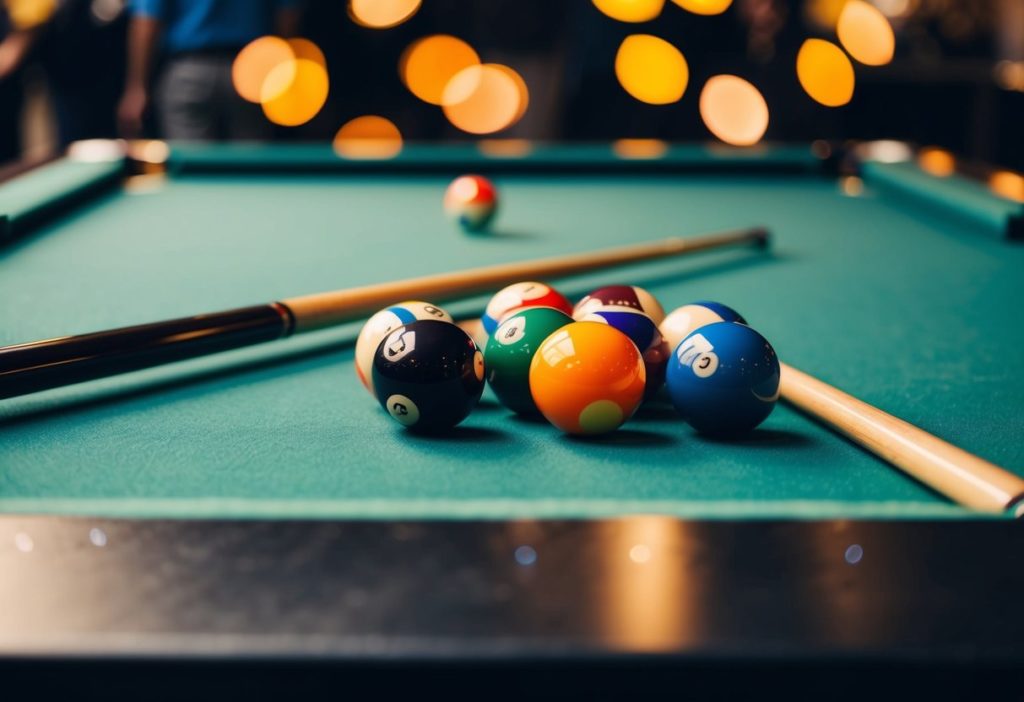
A slate pool table with colourful balls and a cue stick

The durability of slate tops sets them apart from other materials. They resist warping and maintain their shape over time, ensuring a level playing field for years to come. This longevity makes slate top tables a smart investment for home game rooms or commercial settings.

Beyond their practical benefits, slate top pool tables add a touch of elegance to any space. The natural stone appearance complements various decor styles, from classic to modern. With proper care, these tables can become cherished centrepieces for generations of family fun and friendly competition.

Benefits of Slate Top Pool Tables

Slate-top pool tables offer top-notch performance and quality for billiards enthusiasts. These tables provide a superior playing experience and stand the test of time.

Precision and Consistent Play

Slate pool tables deliver unmatched accuracy for professional-level play. The fine-grained rock creates an incredibly flat surface. This ensures balls roll true without unexpected deviations. Players can count on consistent ball movement across the entire table.

The level playing field allows for precise shot-making and strategy. Pros and amateurs alike benefit from the predictable nature of slate surfaces. This consistency lets players focus on improving their skills rather than adapting to table quirks.

Slate’s natural properties resist warping and maintain flatness over time. This stability preserves the table’s playability for years to come.

Longevity and Durability

Slate pool tables are built to last. The tough rock material can withstand decades of use without losing its shape or smoothness. With proper care, a slate table can remain in top condition for generations.

Regular cleaning and meticulous care help maintain the slate’s pristine surface. Unlike other materials, slate doesn’t absorb moisture or expand with temperature changes. This resistance to environmental factors keeps the playing surface true.

The durability of slate means less frequent repairs or replacements. While the initial cost may be higher, the long-term value is clear.

Enhanced Stability

Slate pool tables offer rock-solid stability during play. The hefty weight of the slate, combined with solid wood frames, creates a sturdy base. This stability is key for maintaining the table’s level and preventing unwanted movement.

The substantial mass of slate helps absorb vibrations and impacts. This results in quieter play and less ball bounce after shots. The improved flatness also means fewer dead spots or subtle slopes that can affect gameplay.

Stable tables allow players to lean or rest on the rails without disturbing the playing surface. This added convenience enhances the overall billiards experience.

Different Types of Slate Pool Tables

Slate pool tables come in various styles and sizes to fit different spaces and needs. These tables offer top-notch playing surfaces for billiards enthusiasts.

Standard vs. Outdoor Pool Tables

Standard slate pool tables are made for indoor use. They have a wood frame and a cloth-covered slate top. The slate is 1 inch thick for the best play. Outdoor tables use special materials to resist the weather. They have aluminum frames and waterproof surfaces. Some use Slatron, a fake slate that can handle rain and sun.

Black pool tables are popular for both indoor and outdoor use. They give a sleek look to any space.

Portable and Conversion Pool Tables

Portable pool tables can be moved easily. They often have folding legs and wheels. These tables are great for small homes or parties.

Conversion pool tables serve two roles. They can switch from a pool table to a dining table. A dining top covers the slate surface. This type is perfect for rooms that need to do double duty.

Size Variations: 7 Foot and 8 Foot Options

Pool tables come in different sizes. The most common are 7-foot and 8-foot tables.

7-foot tables:

  • Good for smaller rooms
  • Often used in pubs
  • Faster gameplay

8-foot tables:

  • More space for shots
  • Standard size for many homes
  • Better for learning proper technique

Special Features

Some pool tables have extra features to improve gameplay or ease of use.

Auto ball return systems send balls to a collection area after they’re pocketed. This saves time between games.

Custom cloth colours let players match their table to their decor.

Built-in storage for cues and balls keeps everything tidy.

LED lighting can be added to table pockets for a modern touch.

Selecting the Right Slate Pool Table

Choosing a slate pool table involves considering room size, materials, and potential multipurpose uses. These factors impact gameplay and overall enjoyment.

Considering Room Size and Game Play

Room size affects the pool table size you can fit. 7-foot tables work well in smaller spaces, while 8-foot tables are ideal for larger rooms. Measure your space carefully before buying.

Leave enough room around the table for players to move and use cues comfortably. A good rule is to add 5 feet to each side of the table for proper clearance.

Table size also impacts gameplay. Larger tables offer more challenges and are better for skilled players. Smaller tables can be easier for beginners and casual players.

Materials and Design Options

Slate is the top choice for pool table playing surfaces. It provides a smooth, level area that stays flat over time. Look for tables with at least a 1-inch thick slate for the best performance.

Table frames come in various materials like wood or metal. Wood offers a classic look, while metal can be more modern. Choose based on your style and budget.

Felt colour is another design choice. Green is traditional, but black felt is growing in popularity. Consider how the colour will match your room’s decor.

Pool Dining Tables for Multipurpose Use

Pool dining tables offer a smart solution for small spaces. These tables have a removable top that converts them from a pool table to a dining table.

When choosing a pool dining table, check the quality of both the pool and dining surfaces. The dining top should fit snugly and be sturdy enough for regular use.

Some pool dining tables come with matching benches or chairs. This creates a cohesive look and saves you from buying separate seating.

Installation and Maintenance

Setting up a slate-top pool table requires expertise and care. Proper installation and upkeep are key to enjoying your table for years to come.

Professional Installation for Optimal Play

A slate-top pool table needs expert setup. Pros have the tools and know-how to ensure a level surface. They’ll assemble the frame, place the slate, and secure it properly. The felt is then stretched tight to avoid wrinkles or bubbles.

Correct installation affects gameplay. A level table lets billiard balls roll true. Pros will test the roll and make adjustments. They’ll also set up accessories like the cue rack.

The process can take several hours. It’s not a DIY job. Trying to install it yourself might lead to problems. These could hurt your game or damage the table.

Routine Maintenance and Care

Regular cleaning keeps your table in top shape. Use a soft-bristled brush to sweep the felt. Do this weekly or after each use. This removes dust and chalk that can affect ball movement.

Vacuum the felt gently every month. Use a low-suction setting to avoid stretching the fabric. Wipe the rails and frame with a slightly damp cloth.

A quality cover protects your table when not in use. It keeps dust off and guards against spills. Remove the cover now and then to let the felt breathe.

Check for loose screws or bolts every few months. Tighten them if needed. This keeps the table stable and level.

Avoid eating or drinking near the table. Food crumbs and spills can stain or damage the felt.

Warranty and After-Sales Support

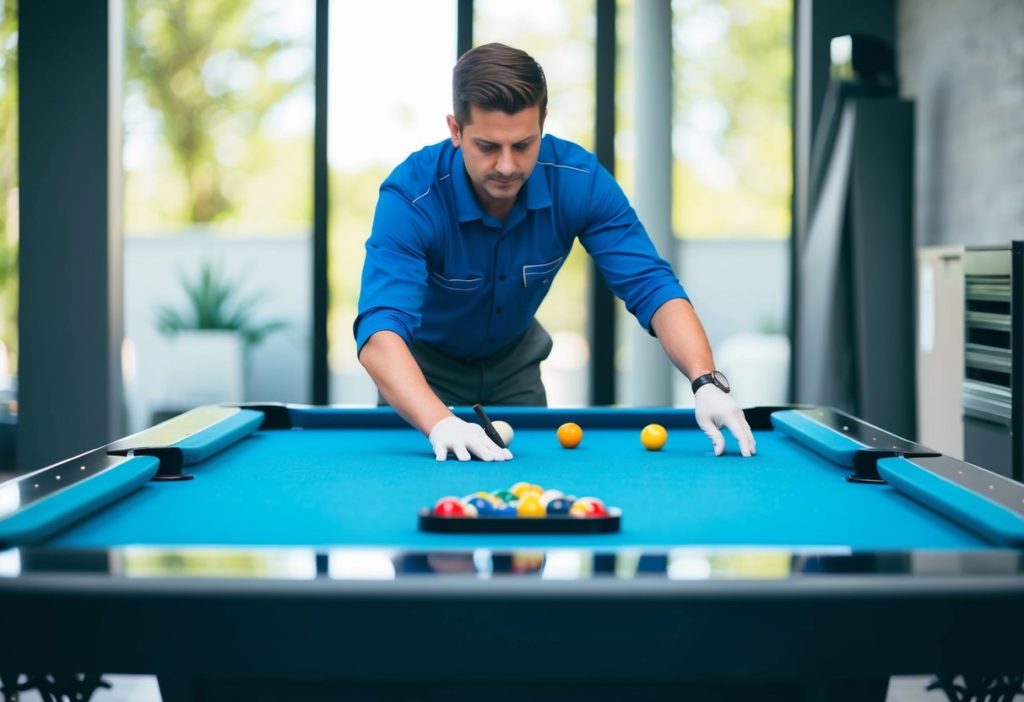
A pool table technician checking consistency of the playing area

Most slate top pool tables come with a warranty. The length and coverage can vary between manufacturers.

Typical warranties last 1 to 5 years. They often cover defects in materials and workmanship. This might include issues with the slate, frame, or pockets.

Some key points to look for in a warranty:

  • Length of Coverage
  • What’s included and excluded
  • How to make a claim
  • If it’s transferable to new owners

After-sales support is also important. Good companies offer help with:

  • Assembly instructions
  • Troubleshooting tips
  • Replacement parts
  • Repairs

It’s wise to check reviews about a company’s customer service. Fast response times and helpful staff can make a big difference if issues come up.

Some manufacturers have online resources. These might include videos, FAQs, and user forums. These can be handy for quick fixes or advice.

Keep all paperwork and proof of purchase. This helps if you need to use the warranty or get support later on.

Remember, proper care of your table can prevent many problems. Follow the maker’s guidelines for maintenance to keep your table in top shape.

Why Choose a Slate Top Pool Table?

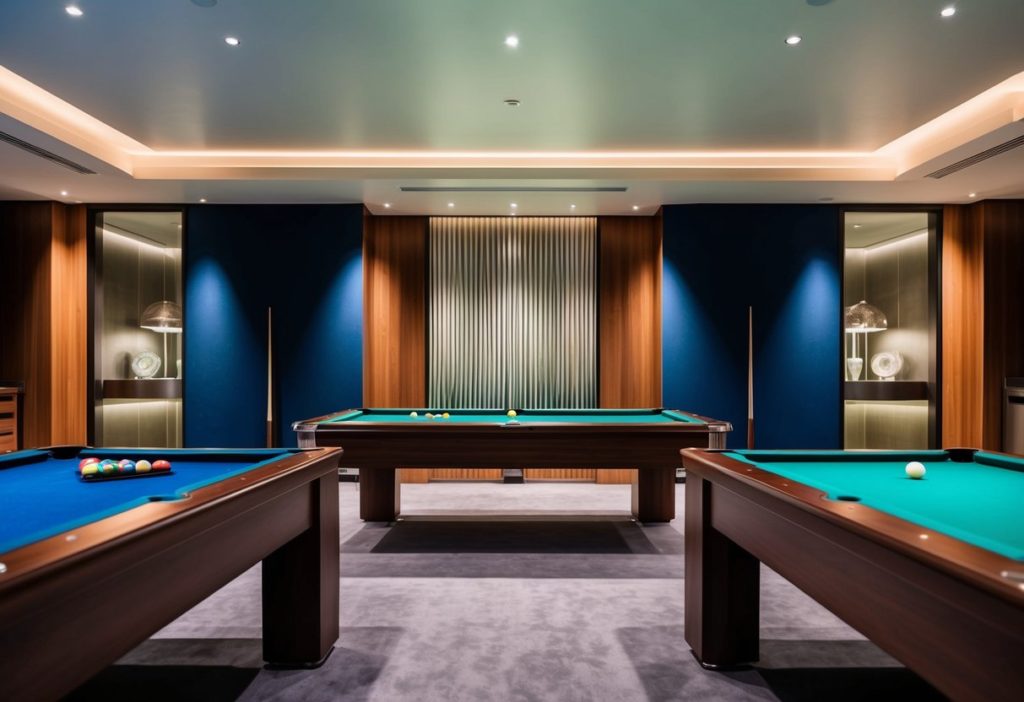
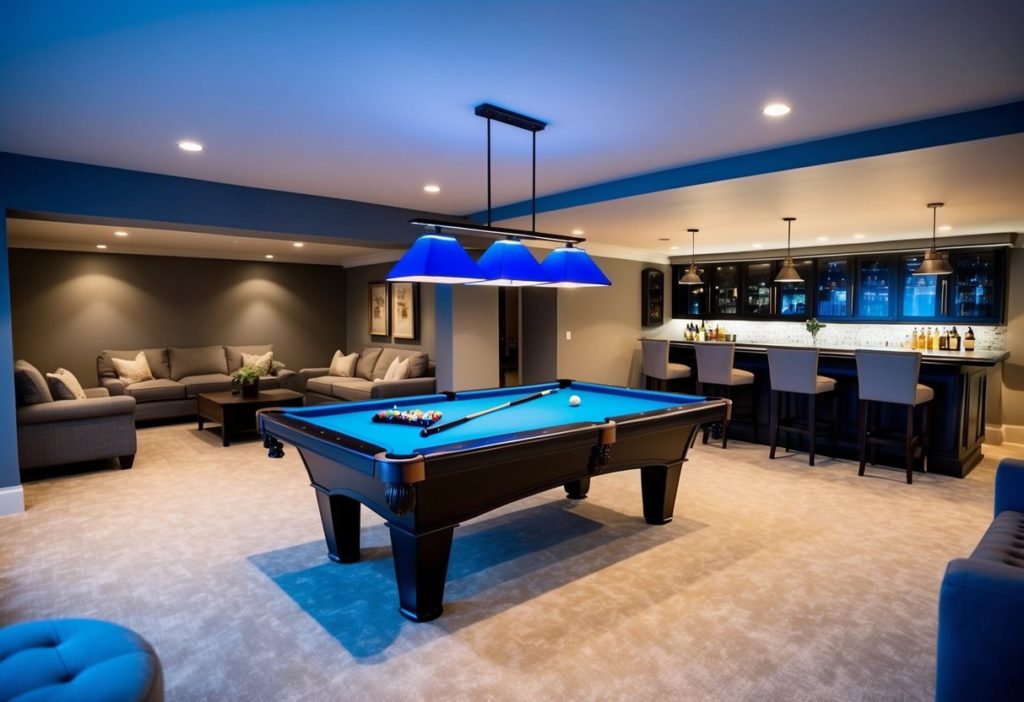
slate top table in sleek, well designed games room

Slate-top pool tables offer the best playing surface for serious billiards enthusiasts. They provide a smooth, flat surface that ensures accurate ball rolls and consistent gameplay.

Comparing Slate to Other Materials

Slate is the top choice for pool tables because of its unique properties. It’s dense, smooth, and doesn’t warp over time. Other materials like compressed wood or AccuSlate can’t match slate’s performance.

Compressed wood tables are cheaper but tend to sag or warp. This leads to uneven play and shorter table life. AccuSlate, a synthetic option, tries to mimic slate but falls short in feel and durability.

Slate tables stay flat and true for decades. They allow for precise shots and predictable ball movement. This is why pros and serious players always pick slate.

The Investment in Quality

A slate pool table costs more upfront but pays off in the long run. It’s a premium choice that lasts for generations with proper care.

The initial price might seem high, but slate tables hold their value well. They don’t need replacing every few years like cheaper options.

For home use, a slate table adds a touch of class to any game room. It’s not just a game; it’s a piece of furniture that can become a family heirloom.

In bars or pool halls, slate tables stand up to heavy use. They keep players coming back for the best possible game experience.

Brand Profiles

A sleek slate top pool table with the Brand Profiles logo prominently displayed

Slate pool tables offer premium playing surfaces for billiards enthusiasts. Two notable brands stand out for their quality and craftsmanship in this space.

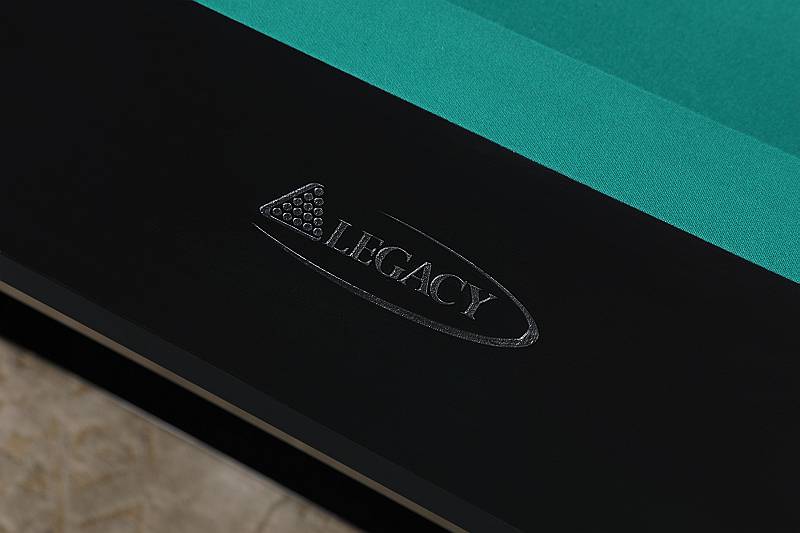
Legacy Billiards Tables

Legacy Billiards creates top-notch slate pool tables known for their accurate ball movement. Their tables come in various sizes to fit different spaces. The company uses high-grade slate for smooth gameplay.

Legacy offers customization options for felt colour and wood finishes. This lets buyers match tables to their decor. The brand focuses on durability, using solid hardwoods in construction.

Assembly is straightforward with Legacy tables. Most models include detailed instructions and necessary tools. The brand provides good customer support for setup questions.

Regal Billards

Regal Billiards specializes in slate-top tables that blend style and function. Their designs range from classic to modern, suiting various tastes. The brand uses a three-piece slate for optimal levelling and play.

Regal tables feature precise pocket cuts for consistent ball drop. The rails use K66 rubber for true rebounds. This helps players improve their skills over time.

The brand offers tables in standard sizes like 7-foot and 8-foot options. They also make oversized models for larger game rooms. Regal’s tables often include accessories like cues and ball sets.

Frequently Asked Questions

Slate-top pool tables are popular choices for serious players and home game rooms. Let’s address some common questions about these high-quality tables.

How much does a slate-top pool table typically cost in Ontario?

Slate-top pool tables in Ontario usually range from $2,000 to $10,000. The price depends on size, brand, and features. Basic models start around $2,000, while custom designs can exceed $10,000.

What should I look for when buying a slate-top pool table?

Check the slate thickness, which should be at least 1 inch. Look for solid wood construction and sturdy legs. Make sure the felt is high-quality and properly stretched. Ask about warranty coverage and delivery options.

What are the benefits of choosing a slate pool table over a non-slate?

Slate tables offer better ball roll and consistency. They stay level over time and provide a professional playing experience. Slate tables are more durable and can last for decades with proper care.

How do I properly maintain a slate-top pool table?

Brush the felt regularly to remove dust and chalk. Use a cover when not in use. Keep the table level and avoid moving it often. Clean balls and cues after each use. Have a professional re-felt the table every few years.

Can slate pool tables be damaged by standing on them?

Yes, standing on a slate pool table can cause damage. The slate can crack or the frame may warp. Always use the table for playing pool only. Avoid placing heavy objects on the playing surface.

What are the weight considerations for installing a slate-top pool table?

Slate tables are very heavy, often weighing 700 to 1,000 pounds. Ensure your floor can support this weight. Ground floor or basement installations are best. Upstairs locations may need extra floor support.

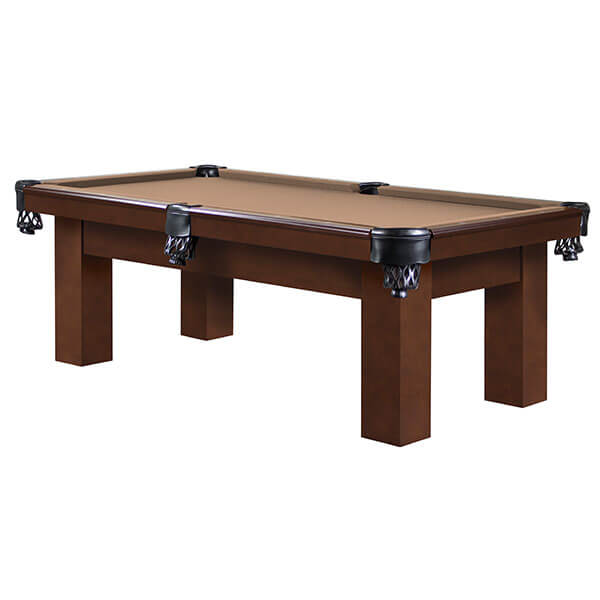
best billiard table slate is represented by the Harpeth pool table by Legacy
This is the Harpeth Billiard Table. Browse the different styles of pool tables

Billiards tables come in many different sizes and appearances. Traditional tables have natural hardwood frames and green felts, while some modern designs boast grey and green felts with dark-painted frames. Likewise, you can find billiards tables in assorted sizes to fit all homes and spaces.

Which is the best type of slate pool table?

The Need for a Solid Frame

Regardless of the look, table composition changes between manufacturers, too. High-end tables consist mostly of hardwood. Consumer-grade tables mix in some softwood like plywood and particleboard.

The more solid the frame, the less maintenance and fewer repairs. Always, hardwood offers better stability—but this also depends on assembly.

Types of Billiards Slates Available

A billiards table needs a strong foundation to bear the weight of its slate. For professional tournaments, the only acceptable material is rock. The ball rolls accurately on concrete. It also promises the highest durability, stability, and straightness.

Slate comes in two weaker varieties: core and wood. Core combines both wood and concrete, whereas wood is simply plywood or particleboard.

The slate core often sags near the rails because of the weight and pressure applied by players. This affects how balls roll nearest the pockets. Slate wood—although susceptible to warping, too—poses a unique disadvantage. The roll of the ball itself is different, which aggrieves experienced players. This is due to how far the ball sinks into the wood and the resistance of the grain.

The minimum width of any slate is 1 inch. That said, the length differs as pure and core slates often come in as many as three pieces for easier portability. Consequently, such slates are harder to level. But when properly installed, the difference between a one and three-piece is undetectable. Slate wood often comes in a single piece, too, usually on smaller recreational tables.

The post The Slate Top Pool Table: Premium Choice for Serious Players first appeared on Canadian Home Leisure.

source https://canadianhomeleisure.ca/slate-top-pool-tables/

Tuesday, November 19, 2024

Pool Table Lines: What are the Markings on a Billiard Table?

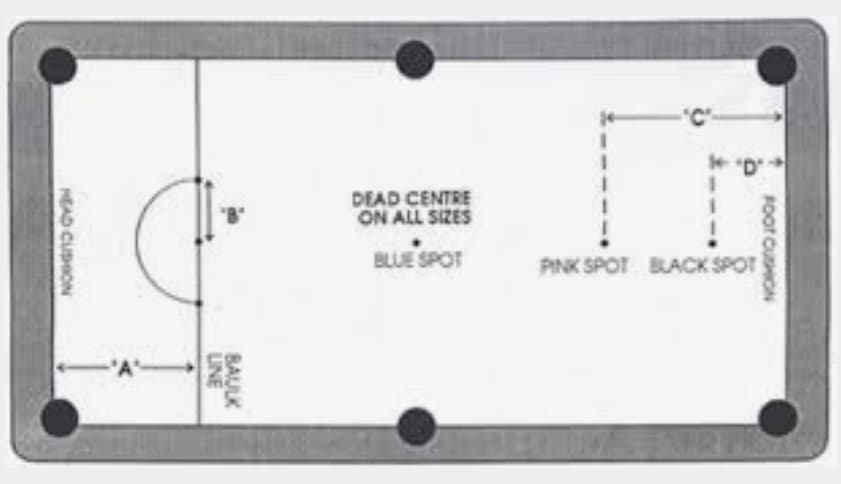
Different pool table markings on a billiard table

Some billiards tables come marked with spots and lines for popular games like pool and snooker. The markings on a snooker table allow for both gameplays—but not vice versa.

Want to Mark Your Own Lines on a Pool Table?

If you buy a virgin table, we recommend hiring a pro to decorate it. Doing it yourself with stickers and markers is difficult. A single slip can be costly and irreversible!

Whether or not you choose to mark the table yourself, you’ll need to understand a few terms.

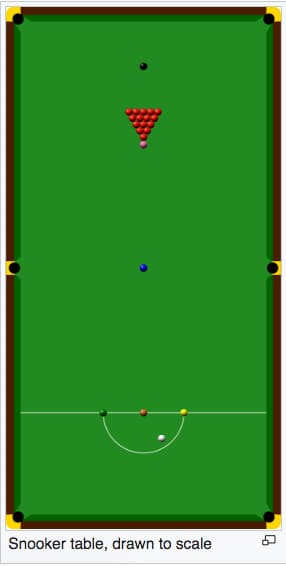
snooker table with the coloured balls and lines drawn to scale
Figure: An illustrated snooker table, marked with the appropriate lines and spots. Image courtesy of Wikipedia.
  • Strings: Imaginary lines that divide the pool table into quadrants. One string runs lengthwise, touching the head and foot rains; one runs widthwise, connecting the two side pockets.
  • Spots: Marked points along the strings. Many tables have a single spot where the two primary strings intersect—the center.
  • Lines: Drawn lines that segment the table. The baulk line appears in most games, identifying the breaking boundary. For snooker, the “D” line connects with the baulk line, forming a semicircle near the head of the table.

Popular Billiards Line and Spot Placements

The game of pool requires a single spot – the apex. It lies halfway between the foot and the center of the table. It is plotted on the longest string.

Another way to calculate the apex is to imagine a string between a side pocket and the left or right foot pocket. Where this string intersects with the one running lengthwise marks the spot.

Other common spots include (see figure):

  • The pyramid for the pink snooker ball (23 inches from the foot);
  • The spot for the black snooker ball (1/11th of the length of the table from the foot rail);
  • The spot for the blue snooker ball (centered between the side pockets);
  • The spots for the yellow, green, and brown snooker balls are at each end of the “D” line and along its semicircle.

The balkline, behind which the player shoots, is at the head of the table. It runs widthwise at roughly one-fifth of the table’s length. This equals 21 ¾ inches from the headrail on a standard 4 ½ by the 9-foot table. Many tables only include the balk line and center point.

The post Pool Table Lines: What are the Markings on a Billiard Table? first appeared on Canadian Home Leisure.

source https://canadianhomeleisure.ca/the-different-markings-on-a-billiards-table/

Friday, November 8, 2024

How to Clean Pool Balls: 3 Easy-to-Use Methods for Billiard Maintenance

Pool balls get dirty over time. Chalk, oils, and grime build up on their surface. This can affect how they roll and interact on the table. Choose one of the options on how to clean pool balls to prolong your billiard equipment and step up your gameplay.

View our selection of Pool Tables for Sale HERE!

Learn how to clean balls to step up your game

Clean pool balls improve game performance and the overall playing experience. Proper cleaning removes dirt and restores the balls’ original shine. This helps them move smoothly across the felt.

Regular cleaning keeps pool balls in top shape. It’s a simple task that makes a big difference. With the right method, anyone can keep their pool balls looking and performing like new.

The Basics About Pool Balls

Pool balls are key to the game of billiards. They come in different colours and numbers. The balls’ materials and how they get dirty affect their care.

Materials and Composition

Pool balls are made of phenolic resin. This material is tough and lasts a long time. It resists chips and cracks well. The balls are smooth and shiny when new. They weigh about 170 grams each.

Standard pool ball sets have 16 balls. There’s a white cue ball and 15 numbered balls. The numbered balls are in solid colours or stripes. Balls are 57 mm wide, give or take 0.127 mm.

Some cheap balls are made of polyester. These don’t last as long as phenolic resin balls. They can get marks more easily.

Common Causes of Dirt and Stains

Pool balls get dirty from normal play. Chalk from cue tips leaves marks on the balls. Players’ hands can leave oils on the surface. The felt on the table can also leave marks.

Drinks spilled on the table can stain balls. Food crumbs might stick to them too. Dust in the air settles on balls over time.

Improper storage can lead to dirt build-up. Balls left out might get extra dusty. Storing them in a damp place can cause mould spots.

Some cleaning products can harm pool balls. Harsh chemicals might dull the shine. They can also leave a film that attracts more dirt.

Preparing to Clean Pool Balls

Getting ready to clean your pool balls is simple. You’ll need a few basic items and a cleaning solution. Let’s go over what you need to do.

Gathering Your Materials

To clean pool balls, you’ll want these things:

  • A bucket or sink
  • Warm water
  • Mild dish soap
  • A microfiber cloth
  • A towel for drying

Make sure your sink or bucket is clean before you start. You don’t want to add dirt to the balls while cleaning them. The microfiber cloth is great for scrubbing without scratching. Pick a soft towel for drying to avoid leaving lint on the balls.

Creating the Cleaning Solution

Mix warm water with a small amount of mild dish soap. Don’t use harsh cleaners, as they might damage the balls. Here’s how to make the solution:

  1. Fill a bucket or sink with warm water.
  2. Add a few drops of mild dish soap.
  3. Mix gently to create suds.

The water should feel warm to the touch, but not hot. Too much heat can harm the balls. Stir the water to spread the soap evenly. This mix will clean the balls without being too harsh on their surface.

Options on the Cleaning Process

Pool balls get dirty with regular use. There are several ways to clean them and restore their shine.

Use Billiard Ball Cleaner

Billiard ball cleaner is made for this task. It’s easy to use and effective. Pour some cleaner onto a microfiber cloth. Rub each ball gently to remove dirt and oils. Wipe off any extra cleaner with a clean part of the cloth.

This method is quick and doesn’t need much effort. The cleaner helps remove tough stains and marks. It also leaves a protective layer on the balls. This can help them stay clean longer.

Make sure to follow the product instructions. Some cleaners may need to sit on the balls for a short time before wiping.

Hand Washing the Balls

Hand washing is a simple way to clean pool balls. Fill a bucket or sink with warm water and mild dish soap. Put the balls in the soapy water. Use a soft cloth to clean each ball.

Rub gently to remove dirt and grime. Pay extra attention to any stains or marks. Rinse the balls well with clean water. Dry them right away with a microfiber towel to prevent water spots.

This method is good for regular cleaning. It’s cheap and uses items you likely have at home. Be careful not to use harsh soaps or scrubbers. These can damage the balls’ surface.

Using an Electric Cleaner for Pool Balls

Electric cleaners offer a hands-off approach. They’re good for deep cleaning or large sets of balls. Add the cleaning solution to the machine as directed. Place the balls inside and turn it on.

The machine spins the balls in the solution. This removes dirt without any scrubbing. Most units take about 5-10 minutes to clean a full set. After cleaning, rinse the balls with clean water.

Dry them well with a microfiber cloth. Electric cleaners can save time and effort. They’re a good choice for frequent players or pool halls. The downside is they cost more than other methods.

Polishing Pool Balls

Polishing pool balls keeps them smooth and shiny. This helps them roll better during games. Two key steps are picking the right polish and using the proper technique.

Choosing the Right Polish

Pool ball polish comes in many types. Look for a polish made just for billiard balls. These work best and won’t harm the balls. Avoid car waxes or furniture polishes. They can leave a slick coating that affects play.

Some polishes need water, while others are dry. Water-based ones are easier to use but may not last as long. Dry polishes give a longer-lasting shine but take more effort to apply.

Check if the polish works for your ball type. Phenolic resin balls need different care than polyester ones. The wrong polish can damage the surface.

The Polishing Technique

Start with clean, dry balls. Use a soft cloth to apply the polish. Microfiber works well and won’t scratch. Put a small amount of polish on the cloth, not directly on the ball.

Rub the polish in small circles. Cover the whole ball evenly. Don’t press too hard or you might damage the surface. Keep polishing until the ball feels smooth.

Let the polish dry as directed. This can take a few minutes to an hour. Once dry, buff the ball with a clean cloth. This brings out the shine.

Polish your balls every few months. More often if you play a lot. Regular care keeps them in top shape for better play.

Caring for Your Pool Balls

Pool balls need proper care to stay in top shape. Regular cleaning and careful storage keep them looking great and playing well.

Regular Maintenance Tips

Clean your pool balls after each use. Wipe them with a soft, damp cloth to remove chalk and dirt. For tougher stains, use a mild soap and water solution. Rinse the balls well and dry them right away with a lint-free towel.

Every few weeks, give your balls a deep clean. Use a special billiard ball cleaner for the best results. These cleaners remove tough grime without harming the ball’s surface. Follow the product instructions carefully.

Check your balls often for chips or cracks. Small damages can affect gameplay. Replace damaged balls to keep your set in good condition.

Storing Your Pool Balls

Keep your pool balls in a cool, dry place when not in use. Avoid leaving them in direct sunlight or near heat sources. This can cause the balls to warp or fade.

Store the balls in their original case or a special billiard ball case. These cases have spots for each ball, keeping them from bumping into each other. This prevents scratches and chips.

Don’t stack heavy items on top of your pool ball case. Too much weight can damage the balls over time. Handle the case with care to avoid dropping or banging the balls inside.

Troubleshooting Common Issues

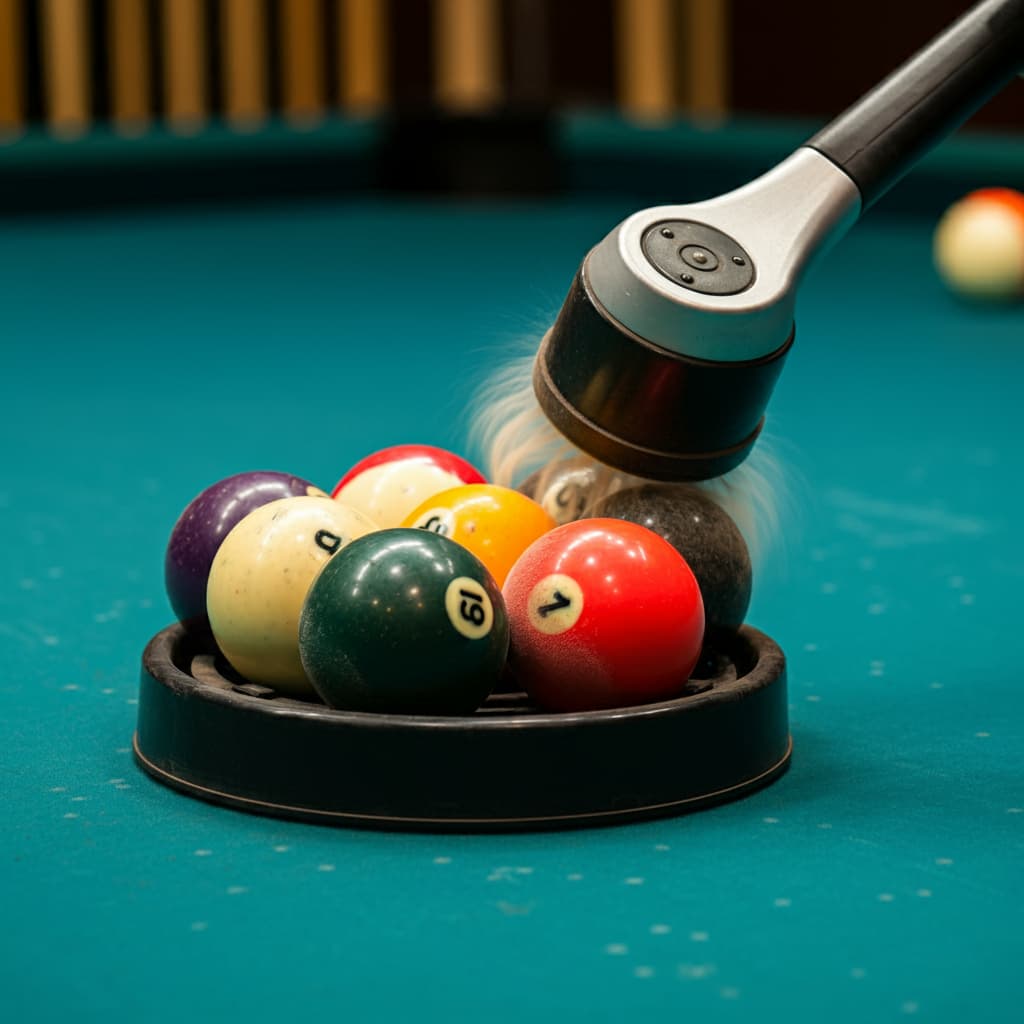
billiard balls being polished with an electric cleaner

Pool balls can develop tricky problems over time. Here are some fixes for common issues you might face when cleaning your billiard balls.

Dealing with Stubborn Stains

Yellow stains on pool balls can be a real pain. Try using a mix of warm water and vinegar to tackle these tough marks. Soak the balls for 15 minutes, then scrub gently with a soft cloth.

For extra stubborn stains, make a paste with baking soda and water. Apply it to the dirty spots and let it sit for 5 minutes. Rinse well after.

If these methods don’t work, you can try a specialized pool ball cleaner. Follow the product instructions carefully.

Remember to dry the balls fully after cleaning to prevent water spots.

Addressing Scratches and Chips

Small scratches on pool balls can often be buffed out. Use fine-grit sandpaper to gently smooth the scratch. Be careful not to sand too much or you’ll change the ball’s shape.

For deeper scratches, you might need a pool ball polishing compound. Apply it with a soft cloth and buff it in circular motions.

Chips are trickier to fix at home. For badly damaged balls, it’s best to replace them. Using chipped balls can affect gameplay and damage your table’s felt.

Regular cleaning and careful handling can help prevent scratches and chips in the first place.

Enhancing the Gaming Experience

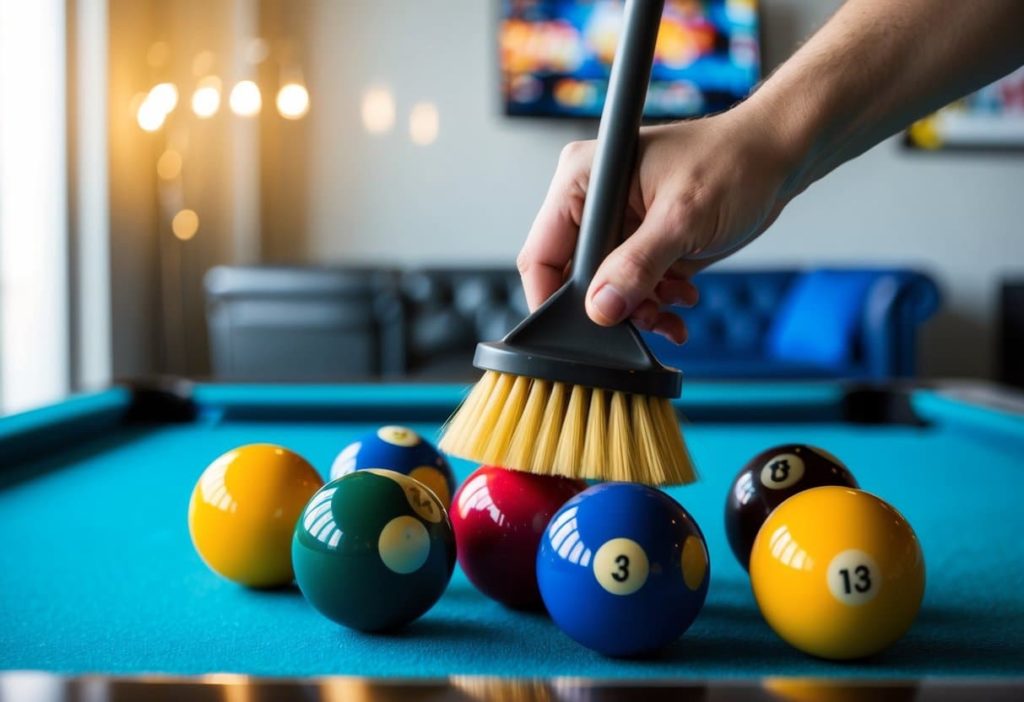
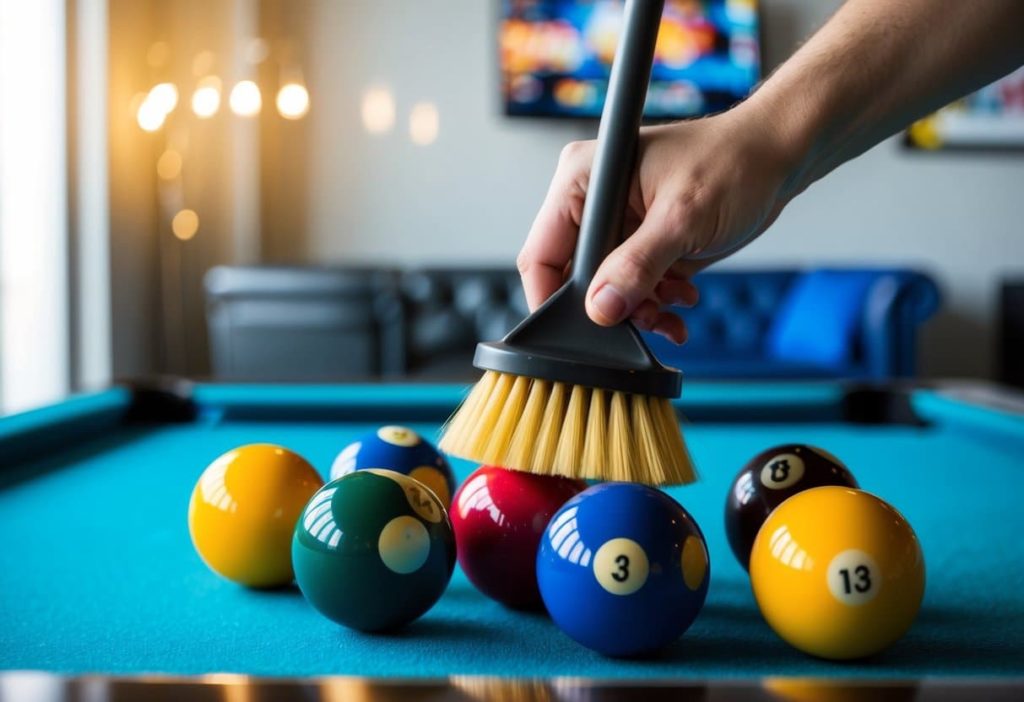
A hand held cleaning brush scrubbing a set of colorful pool balls in a well-lit gaming room

Clean billiard balls make pool and snooker more enjoyable. They roll smoothly and look great on the table. Players can step up their game with the right cleaning methods and tools.

The Impact of Clean Billiard Balls

Clean balls improve play in many ways. They roll straighter and more predictably on the felt. This helps players make better shots. Dirt and grime can throw off a ball’s path, leading to missed shots.

Clean balls also stick less to each other and the cue ball. This means better control over spin and ball placement. Players can pull off trickier shots with ease.

Shiny, clean balls look great too. They add to the classy feel of a billiards room. Guests will be impressed by the well-kept equipment. It shows care and respect for the game.

Upgrading to Professional Cleaning Equipment

A ball-washing machine is a game-changer for serious players. These machines clean balls quickly and thoroughly. They use special cleaning solutions to remove tough dirt and oils.

Ball washers come in different sizes. Small ones clean a few balls at a time. Larger ones can wash a full set in minutes. Some even dry and polish the balls after cleaning.

While pricey, these machines save time and effort. They’re great for busy pool halls or clubs. Home players might find them worth it too, especially if they play often.

Regular use of a ball washer keeps balls in top shape. This means less wear on the felt and better play overall.

Why You Need to Clean Your Billiards Balls Often

maintaining pool ball set

Just as you brush your table and chalk your cues, you should clean your billiard balls regularly. Besides enhancing the sheen, keeping your billiard balls dust-free has a few benefits.

#1. Cleaning ensures consistent playability

Clean, polished billiard balls roll smoothly. With an even surface—not raised or bumpy with dust—your strokes are cleaner.

#2. It reduces table maintenance

Chalk from the pool cue powders the cue ball. During its travels, some of that chalk falls onto the table. Consequently, object balls collect this debris and transport it during gameplay. Such chalk is abrasive and can damage the table.

We recommend wiping your billiards set with a microfiber cloth between uses. Occasionally, you should give the entire set a thorough cleaning.

Washing Your Billiards Balls

Balls made from phenolic resin require special cleaning products. Regular detergents often leave an unwanted film around the surface. That said, phenolic resin is a slick and durable substance that needs little attention. A simple wipe-down should be sufficient.

You can always purchase Aramith Ball Cleaner or a similar product from your local billiards store to refresh your set. Hot water, too, can dissolve dried chalk and buff out minor imperfections.

For other materials like plastic and polyester, avoid harsh liquid detergents. The wrong product can lead to scratches—worse it can remove the finish! Of course, ensure your balls are dry and rinsed before placing them back onto the table. As harmful as chalk can be to cloth, residual detergent is a far greater threat.

You can buy billiards balls of various materials, and each set may demand a different cleaning agent. Always consult the manual in the box or swing by the manufacturer’s site for advice. Do not assume regular detergent works without doing a little research first!

Frequently Asked Questions

A hand reaching for a pool ball with a cleaning brush and a bottle of cleaner nearby

Pool ball cleaning can be simple with the right methods and products. Here are answers to common questions about keeping billiard balls in top shape.

What is the recommended method for cleaning discoloured pool balls?

For discoloured pool balls, a mix of warm water and mild dish soap works well. Scrub gently with a soft cloth or sponge. Rinse the balls with clean water and dry them right away with a lint-free towel.

Can you effectively wash pool balls by hand, and if so, how?

Yes, washing pool balls by hand is very effective. Fill a sink with warm water and add a bit of dish soap. Clean each ball with a soft cloth, rinse well, and dry them off quickly.

What household products can be safely used to clean pool balls?

Safe household products for cleaning pool balls include dish soap, white vinegar, and baking soda. These are gentle yet effective at removing dirt and grime. Avoid harsh chemicals that might damage the balls.

Are there any specific techniques for cleaning Aramith pool balls?

Aramith pool balls need gentle care. Use a soft cloth with warm water and mild soap. Don’t use strong chemicals or abrasive materials. Dry the balls right away to keep their shine.

Is there a particular machine designed for cleaning pool balls?

Yes, there are special machines for cleaning pool balls. These machines use water and cleaning solutions to wash many balls at once. They’re often found in pool halls and are great for regular cleaning.

How often should pool balls undergo cleaning for optimal maintenance?

Clean pool balls after every few games or at least once a week if used often. Regular cleaning keeps them looking good and playing well. For less frequent use, monthly cleaning is fine.

The post How to Clean Pool Balls: 3 Easy-to-Use Methods for Billiard Maintenance first appeared on Canadian Home Leisure.

source https://canadianhomeleisure.ca/how-to-clean-pool-balls/

Hot Tub Leak Repair Tips for Fast, Permanent Fixes

A leaking hot tub doesn’t have to mean expensive service calls or weeks of downtime; you can often locate and fix the problem yoursel...